Reviewed · TOURS
Bratislava Post-Communism Tour
Want to understand Bratislava after 1989 in 2.5 hours? This private tour strings together civic squares and memorials tied to the 1989 Velvet Revolution, plus Soviet-era apartment life, using a classic car and lots of personal guide attention.
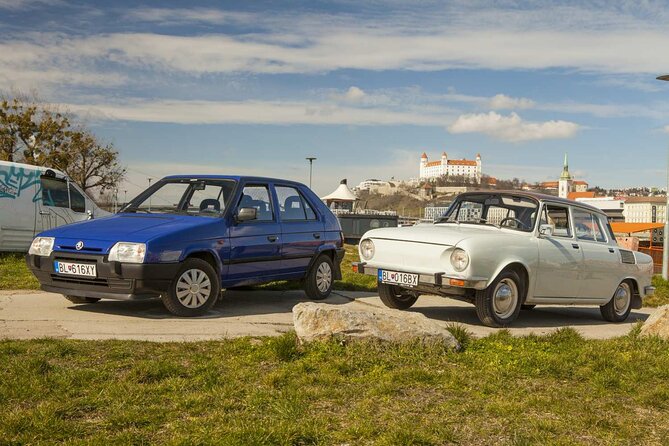
One consideration: the retro car is not guaranteed in winter conditions or during car repairs, so your ride may switch to a green 1992 VW Caravelle or another newer vehicle.
In This Review
- Key things that make this tour work well
- Why the post-1989 story fits best with a guided route
- Classic car ride, and the vehicle you may actually get
- Stop 1 at Authentic Slovakia: a quick setup before the big names
- SNP Square for the Velvet Revolution, and how to look at a civic space
- Freedom Square: finishing the public-space chapter
- Presidential Palace and socialist-era objects, explained along the drive
- Kmeťovo námestie: prefab housing and Stein brewery in real time
- Slavin Memorial: views that teach city geography and meaning
- Price, what you get, and who this is best for
- Should you book the Bratislava Post-Communism Tour?
- FAQ
- How long is the Bratislava Post-Communism Tour?
- Is the tour private?
- What language is the tour offered in?
- Is hotel pickup included?
- Does the tour use a classic or retro car?
- What’s included in the price?
- Is there anything not included?
- What is the meeting point and end point?
Key things that make this tour work well
- Private group only: just your group, so you can set the pace and ask more questions.
- Classic-car atmosphere: a throwback drive that makes the communist-to-now contrast feel real.
- Real-world stops: you spend time on squares and housing areas, not only postcard views.
- Multiple eras in one loop: Velvet Revolution sites, socialist-era objects, prefab housing, then Slavin.
- Small comfort extras: beverages and snacks included, so you stay focused during the ride.
Why the post-1989 story fits best with a guided route
Bratislava is small enough that you can see a lot on foot. But the part you actually need help with is the meaning: which places mattered in 1989, how the communist system showed up in daily life, and what changed after the regime fell. This tour is built for that context.
I like tours that teach you how to read a city. Here, you do that by moving between key public spaces and monuments, then backing it up with what your guide points out along the way. You end up understanding why certain buildings, squares, and housing blocks still shape how people experience the city today.
If you only do the old-town highlights, you miss the layers that explain modern Bratislava’s identity. This route fills that gap without turning into a textbook marathon, mostly because the stops are short and focused, and the car ride keeps the energy moving.
More Iron Curtain and communist-era routes:
- Bratislava: Soviet Era and Post-Communist Tour
★ 5.0 · 123 reviews - 20th Century Tour World War 2 and Communism
★ 5.0 · 27 reviews - Bratislava: City and Iron Curtain and Bunker by E-Bike Tour
★ 5.0 · 11 reviews
Classic car ride, and the vehicle you may actually get
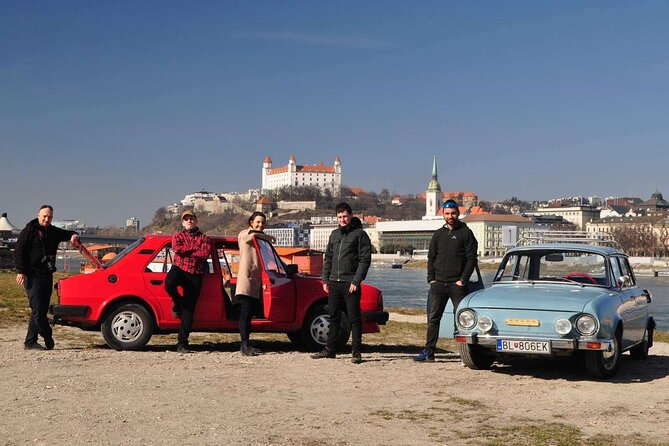
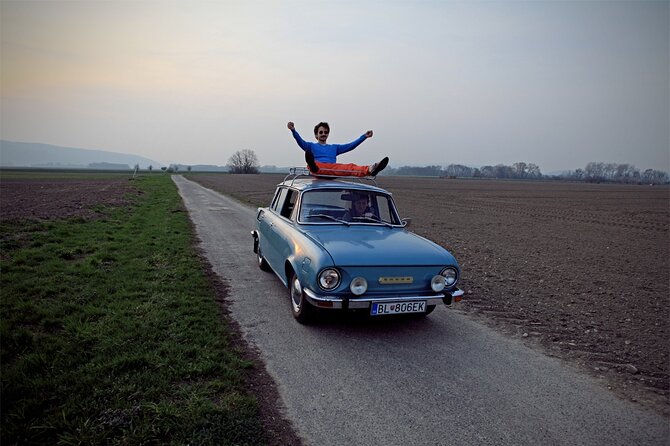
The big charm factor is the drive. You’re not just commuting between sights, you’re traveling in a classic car feel that makes communist-era references land better. Several people praise the experience of being driven in an older model and the guide’s pace and driving, which matters when you’re stopping often.
That said, don’t assume the exact retro vehicle is locked in. The tour notes that the retro car can change in winter conditions or if there’s repairs. If that happens, you may ride in the green 1992 VW Caravelle or another newer vehicle.
Practical tip: if you’re photo-focused, plan to take pictures at the stops, not while the car is moving. Most of the viewing time comes when you’re parked at a square or viewpoint, like at Slavin and Kmeťovo námestie.
Stop 1 at Authentic Slovakia: a quick setup before the big names
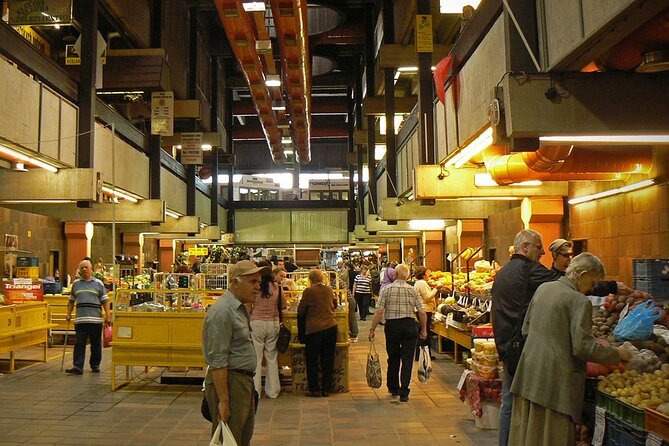
Your tour begins at Františkánska 490/7 in Bratislava’s Old Town area. Then you head to the first stop: Authentic Slovakia. This is a short meeting point stop, around five minutes, where your guide sets the stage for what you’ll see next.
This first stop matters more than the clock suggests. It’s where you get the mental map: how the guide will connect the 1989 revolution moment to the longer communist period, and how everyday life shows up in architecture and public space. In other words, you get the keys before the door starts opening.
You may also get a strong “seeing is believing” moment here, because some guides use this stop to show how ordinary places from the past can still look functional today. Even if you’re not there to shop, it’s a useful anchor point for the rest of the tour.
SNP Square for the Velvet Revolution, and how to look at a civic space
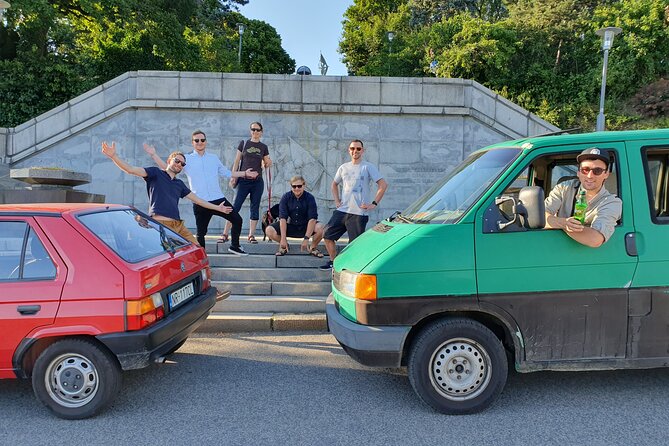
SNP Square (Namestie SNP) is your next stop, also brief, around five minutes. The guide focuses on the square’s history and how it connects to the Velvet Revolution in 1989. This is one of those places where political change becomes physical space.
Here’s what to do with your eyes: look at the scale of the square and think about crowds and visibility. Civic areas like this are designed to host public gatherings, and in 1989 that kind of visibility mattered. Even a quick stop can make the symbolism click once your guide connects it to the timeline.
Because the stop is short, you should listen for the specific details your guide highlights, then take a couple of photos to remind yourself later. If you want deeper discussion, this is a good moment to ask one question before you move on, since the tour flows quickly between eras.
Freedom Square: finishing the public-space chapter
Next comes Freedom Square, where you’ll spend around ten minutes. Again, it’s not just a photo stop. Your guide explains the history and shares interesting facts about the objects around the square, plus context about the area.
This is where you see how the “after 1989” story isn’t one single event. It’s a set of shifts in power, meaning, and identity that show up in what gets honored and what gets repurposed. If your brain likes connections, Freedom Square is a good place to link what you learned at SNP Square to what changed afterward.
Practical tip: if you’re doing Old Town the same day, put this tour before you drift into casual wandering. That way, the squares stay meaningful instead of blending into scenery.
Still deciding? These come up next in Bratislava:
- Bratislava: Sightseeing Bus Tour★ 4.5 · 2,786 reviews
- Bratislava: Cruise – Devín Castle Round Trip★ 4.3 · 760 reviews
- From Vienna: Bratislava and Budapest Guided Day Trip★ 4.8 · 537 reviews
- Bratislava: 1-Hour Small Group Walking Tour★ 4.4 · 379 reviews
Presidential Palace and socialist-era objects, explained along the drive
Between the big stops, you get drive-by commentary that adds texture. One section of the route includes explanations about the Presidential Palace and a socialist-era fountain visible nearby. Your guide also mentions interesting facts about several objects as you pass them.
This “on the move” part is useful because some of the best context in Bratislava isn’t at a single monument. It’s in what’s positioned near power centers and how city design reflects the era’s priorities. A fountain might sound like a throwaway detail, but in communist-era city planning, public features often served as symbols and gathering points.
If you’re the type who worries you’ll miss stuff while seated, don’t. The commentary is live, and the route is designed for listening. Use that time to plan your questions for later, especially if you want more on how housing and everyday life changed after the regime.
Kmeťovo námestie: prefab housing and Stein brewery in real time
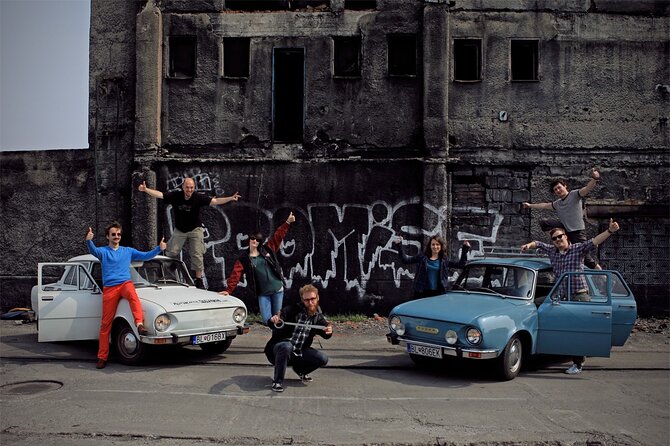
Kmeťovo námestie is one of the longer stops, around 20 minutes, and it’s a standout if you like architecture with a backstory. The guide covers the history of several objects here, including the first prefabricated housing block in Slovakia and the Stein brewery.
This is important because communist-era life is often reduced to ideology. But ideology becomes real through where people live, how neighborhoods are built, and what local industry looks like. A prefab housing block tells you how the state approached speed, standardization, and mass living. A brewery connects that daily-life story to work and local rhythms, not just politics.
What to do during the time on site: look for how the buildings sit in the area, not just what they look like at eye level. Then connect it to the idea of “system life,” meaning daily routines shaped by design. You’ll probably find the explanation sticks better than any single statue visit.
If you’re traveling with someone who prefers less politics, this stop often helps because it’s concrete. It’s easier to talk about buildings, and your guide can bring the human angle without turning it into a lecture.
Slavin Memorial: views that teach city geography and meaning
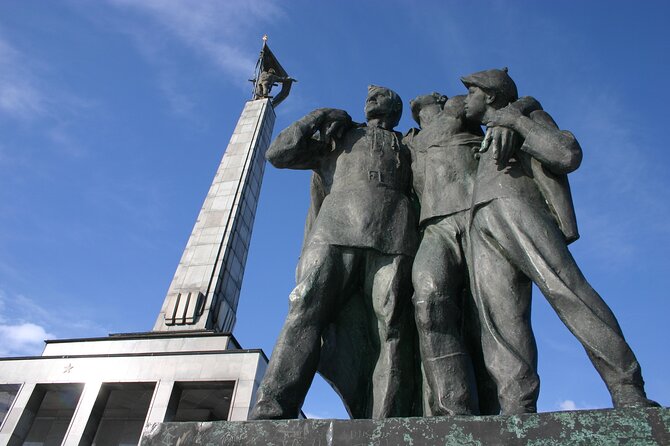
The final big stop is Slavin, with about 20 minutes here. Your guide explains the history of the site and shares facts, while also using the great views to explain the history and geography of Bratislava.
This is where the tour shifts from “what happened” to “how the city is shaped.” From a viewpoint like Slavin, you can better understand relationships between areas, why certain neighborhoods feel connected or separate, and where key power or population areas sit. Geography helps you remember stories because it gives them a stage.
Take advantage of the viewing time. Don’t rush your photos. If you want to remember the timeline, ask your guide to point out how what you saw earlier connects to the broader story of the city’s layout.
Slavin works especially well if you like memorial spaces. It’s not only about looking at the past, it’s about hearing why the location and visibility mattered.
Price, what you get, and who this is best for
At about $133.02 per person, this tour can be a smart value if you want guided meaning, not just sightseeing. You’re paying for several things that are usually separate costs: private transportation, pickup and drop-off at selected hotels, a driver/guide setup, live commentary, and included beverages and snacks.
You also get the practical benefit of time. In roughly 2 hours 30 minutes, you hit multiple historic points without piecing together buses or trying to decode which area matters for what part of the 1989 story. Group discounts are available, which can improve value if you’re traveling with more than two people.
Who should book:
- You want a focused “communism to post-communism” story, anchored to real places.
- You like architecture and urban design, not only dates and names.
- You prefer a private setting where you can tailor the pace. Several guides are praised for adapting to different interests across ages.
Who might hesitate:
- If you dislike political context and prefer purely medieval or purely scenic itineraries, this may feel heavy on explanation. You can fix that by asking your guide how much detail to emphasize at the start.
Should you book the Bratislava Post-Communism Tour?
I’d book it if you want Bratislava to make sense beyond Old Town photos. The tour’s strength is that it links major turning points like the Velvet Revolution to the everyday city fabric, including housing design and symbolic public spaces. The classic-car feel helps you experience that contrast without making the day exhausting.
I’d skip or shorten your expectations if you’re only in Bratislava for quick viewpoints and casual strolling. This is the kind of tour where you’ll get the most from listening and asking questions.
If you do book, I suggest one small move that pays off: come ready with one or two questions about the period, like how everyday life differed before and after 1989, or why certain locations became focal points. That turns the drive into a conversation, not just a one-way walkthrough.
FAQ
How long is the Bratislava Post-Communism Tour?
It runs about 2 hours 30 minutes (approx.).
Is the tour private?
Yes. It’s a private tour, and only your group participates.
What language is the tour offered in?
The tour is offered in English.
Is hotel pickup included?
Hotel pickup and drop-off are included for selected hotels. The start is at Františkánska 490/7, and pickup instructions depend on your hotel.
Does the tour use a classic or retro car?
Transport is by private vehicle and the tour notes that a retro car is not guaranteed in some cases (like winter conditions or car repairs). If that happens, you may use a green 1992 VW Caravelle or another newer vehicle.
What’s included in the price?
Included are taxes and fees, beverages, driver/guide, live commentary on board, a local guide, hotel pickup and drop-off (selected hotels only), private tour and transport by private vehicle, and snacks.
Is there anything not included?
No exclusions are listed.
What is the meeting point and end point?
The tour starts at Františkánska 490/7, 811 01 Bratislava-Staré Mesto, Slovakia. It ends back at the same meeting point.
New in the Bratislava listings
Tours, compared.
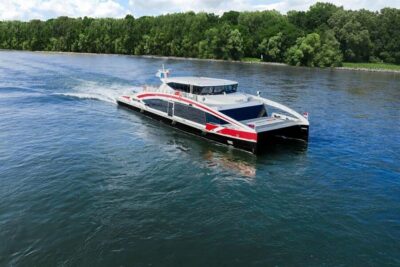
Guided Tour to Bratislava with Speed Boat Ride
Read our review →
Bratislava City & Castle Walking Tour with Sebastian in English
Read our review →
Riverside, Castle or Complete City Segway Tours
Read our review →