Reviewed · TOURS
20th Century Tour World War 2 and Communism
Bratislava remembers, stone by stone. This 2-hour walk strings together the 20th century in a tight loop, from the 1st Republic era to the fall of Communism, using real places you can see and stand beside.
I like two things most: the storytelling from local guides (often with family details) and the way the route stays moving, about 10 minutes at each stop. One possible drawback is that it can feel info-heavy in a short time, especially if you prefer slower museum pacing rather than quick street-level context.
In This Review
- Quick hits on WWII and Communism in Bratislava
- A 2-hour timeline walk across Bratislava’s power centers
- Start at Františkánske námestie, then meet the 1st Republic at SNP Square
- Heydukova Street Synagogue: WWII and the Holocaust in Slovakia
- Hurbanove kasárne at the Ministry of Culture: the end of WWII and the communist turn
- Freedom Square and the communist terror, plus how the city was redesigned
- Slovak Radio: communist architecture and the story behind ugly buildings
- Government palace offices: seeing where executive power sat
- Presidential Palace: the White House of Slovakia and life under party rule
- Back to Namestie SNP: fall of the wall, 1990s changes, and Bratislava’s new role
- What makes the guides on this tour so effective
- Price, group size, and pacing, the practical stuff that affects your experience
- Who this tour suits best
- Should you book 20th Century Tour World War 2 and Communism?
- FAQ
- How long is the tour?
- What language is the tour offered in?
- How much does the tour cost?
- Is there a ticket or admission fee for the stops?
- What is the maximum group size?
- What is the weather requirement and cancellation option?
Quick hits on WWII and Communism in Bratislava
- A short, structured loop that covers the timeline from the 1st Republic to the 1990s
- Strong local guide style with clear English and Q and A as you walk
- Free access at each listed stop, so you get context without entry fees
- Key political and architectural landmarks tied directly to what changed under Communism
- A synagogue stop that frames WWII and the Holocaust in Slovakia with careful focus
A 2-hour timeline walk across Bratislava’s power centers
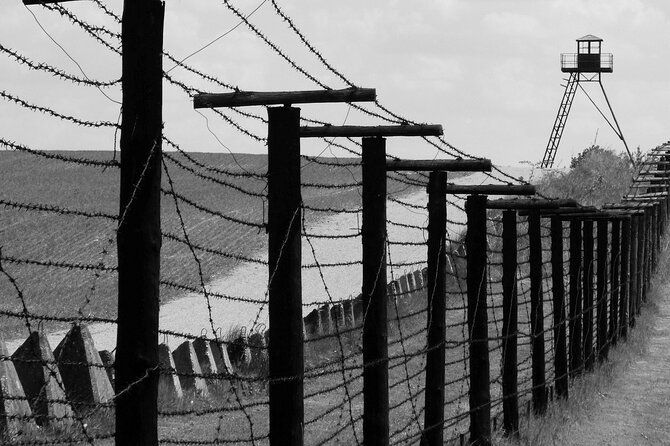
This tour is built for people who want a clear sense of what happened, not just a list of monuments. It runs about 2 hours 5 minutes and keeps you outdoors most of the time, with each stop roughly 10 minutes. That pacing is perfect if you like walking and absorbing in small chunks, but it also means you are moving through big themes fast.
The price is strikingly low at $6.02 per person. The best part is what that buys you: an organized route through landmarks that otherwise take you a lot longer to connect on your own. In addition, the listed stops note free admission, so you are mostly paying for interpretation and local perspective, not entrance tickets.
More Iron Curtain and communist-era routes:
- Bratislava Post-Communism Tour
★ 5.0 · 762 reviews - Bratislava: Soviet Era and Post-Communist Tour
★ 5.0 · 123 reviews - Bratislava: City and Iron Curtain and Bunker by E-Bike Tour
★ 5.0 · 11 reviews
Start at Františkánske námestie, then meet the 1st Republic at SNP Square
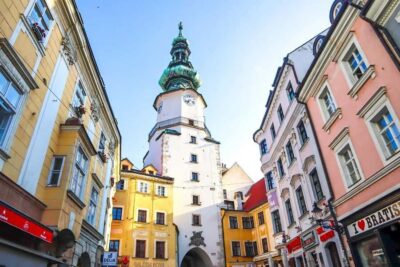
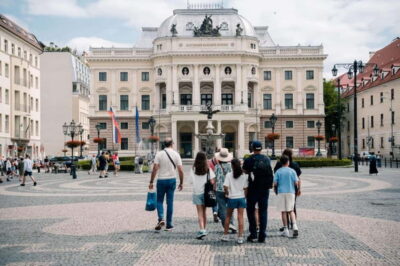
You begin at NetSolution s.r.o., Františkánske námestie 412/7, with a 2:30 pm start time. From there, you head to Namestie SNP (SNP Square), one of the city’s big public stages.
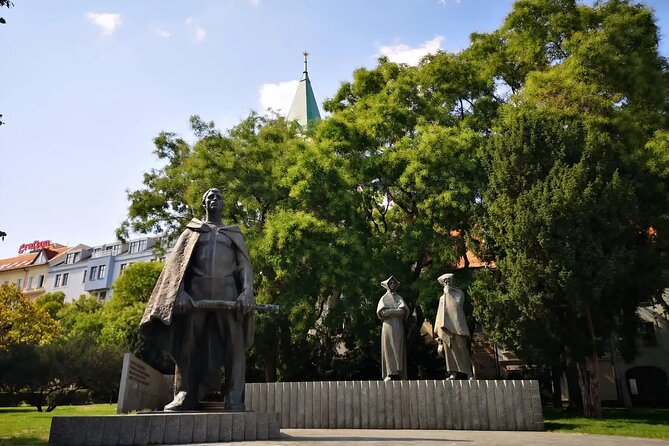
At the square, the guide focuses on the creation of the 1st Republic and points out statues of heroes from the uprising. This stop is not just about names on stone. It is about how public space in Bratislava used symbolism to shape identity, long before Communism and even before the most dramatic mid-century changes.
Tip for your photos: In places like SNP Square, angles matter. Spend those 10 minutes using the guide’s prompts, not your own instincts, because you get a better story when you photograph what they point to.
Heydukova Street Synagogue: WWII and the Holocaust in Slovakia
Next comes Heydukova Street Synagogue, described as the last synagogue in Bratislava. The emphasis here is on WWII and the Holocaust in Slovakia.
This is the emotional center of the walk. You do not come here for quick trivia. You come for context, placed in the city itself. It is also a useful reminder that the 20th century is not only about governments and architecture. It is about communities, terror, loss, and survival, and the guide keeps the focus on that connection.
Consideration: If you are sensitive to heavy subject matter, give yourself a breather after this stop. The tour keeps moving, and the next areas shift toward postwar politics and urban change.
Hurbanove kasárne at the Ministry of Culture: the end of WWII and the communist turn
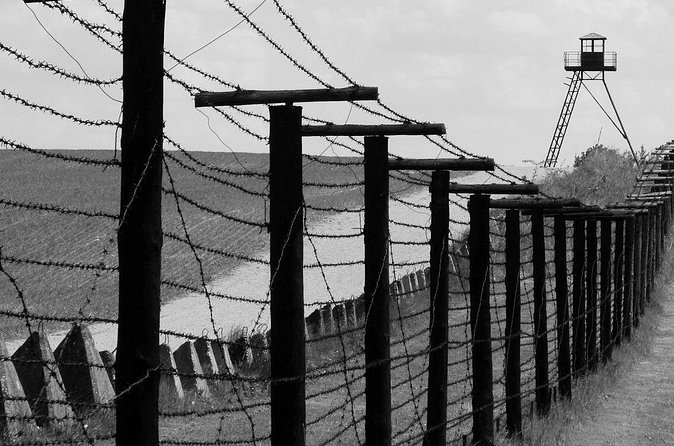
The route then leads to Ministerstvo kultúry SR – Hurbanove kasárne. Here the theme is the end of WWII and the transition into the communist period.
You can think of this stop as the hinge in the story. You are moving from the shock of war toward the new system, where power shifts quickly and daily life changes more quietly. Even though you are outside and looking at a current building, the guide frames it as part of the postwar reorganization of society.
What I like about this approach: Instead of treating Communism as an abstract idea, the tour ties it to specific places and roles, which makes the timeline feel less like a history chapter and more like how a city reorganizes itself.
Freedom Square and the communist terror, plus how the city was redesigned
Then you arrive at Freedom Square, where the guide covers communist terror and how urban planning changed in the government district.
This is a strong stop for two reasons. First, it connects repression to physical space, which is often missing in generic history tours. Second, it helps you understand why certain areas look the way they do. When the government wants control, it also wants a city layout that supports power, visibility, and movement.
You are also learning how regimes communicate. The guide draws attention to what gets emphasized in streets and squares, and what gets pushed to the side. It is practical history, the kind you can spot while you walk.
Still deciding? These come up next in Bratislava:
- Bratislava: Sightseeing Bus Tour★ 4.5 · 2,786 reviews
- Bratislava: Cruise – Devín Castle Round Trip★ 4.3 · 760 reviews
- From Vienna: Bratislava and Budapest Guided Day Trip★ 4.8 · 537 reviews
- Bratislava: 1-Hour Small Group Walking Tour★ 4.4 · 379 reviews
Slovak Radio: communist architecture and the story behind ugly buildings
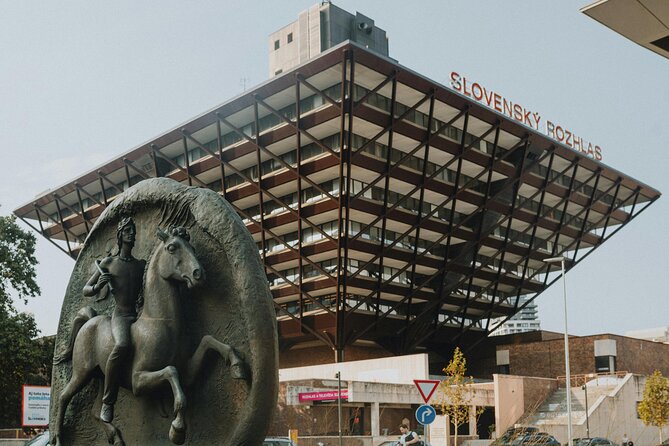
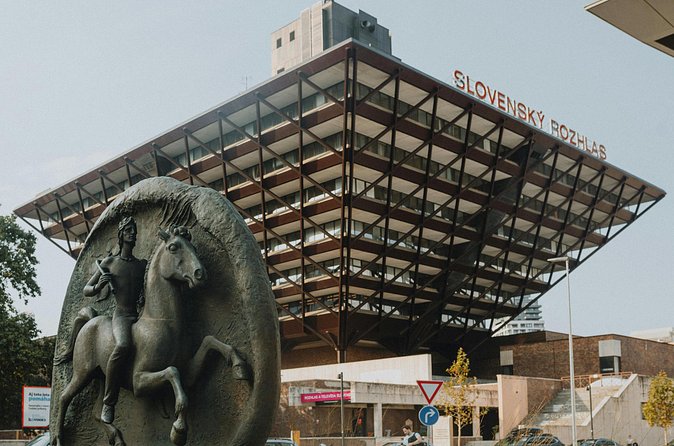
Next is Slovak Radio, and the tour frames the building style through the idea of communist architecture. The listing notes it as among the top 30 ugliest buildings in the world, and the guide uses that attention-grabbing tag to talk about design under the communist era.
This stop is surprisingly engaging if you like architecture, even a little. You see a concrete example of how ideology can shape form. The important part is that the tour does not just say the building is ugly and move on. It helps you interpret why large-scale communist design often prioritized function, mass, and official presence over human-scale comfort.
Quick way to get more out of it: Watch the building’s massing, not only its appearance. The guide’s comments help you connect that look to the era’s priorities.
Government palace offices: seeing where executive power sat
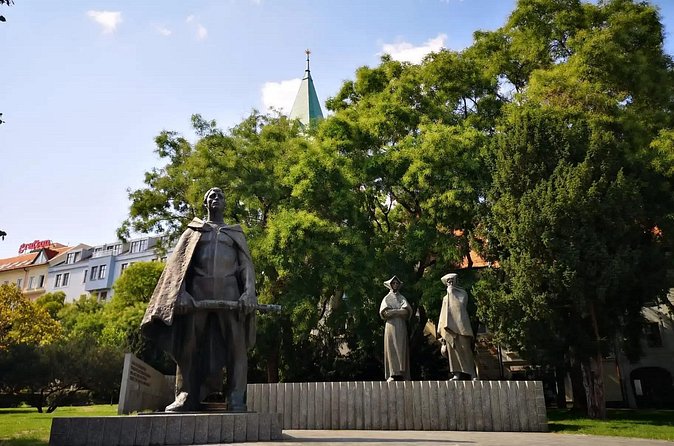
The itinerary also includes the Palace of the executive branch of the state, a government palace and offices.
This is not a long stop, but it matters because it completes the power picture. If SNP Square represents symbolic politics, and Freedom Square represents public control, then executive offices represent decision-making. In short, you are looking at where authority gets translated into policy and daily rules.
I like that the tour does not overdo it here. With only about 10 minutes, you get the meaning without turning it into a lecture that outlasts your feet.
Presidential Palace: the White House of Slovakia and life under party rule
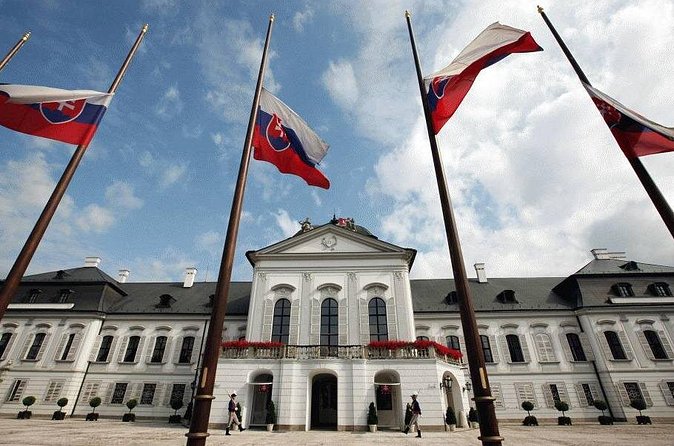
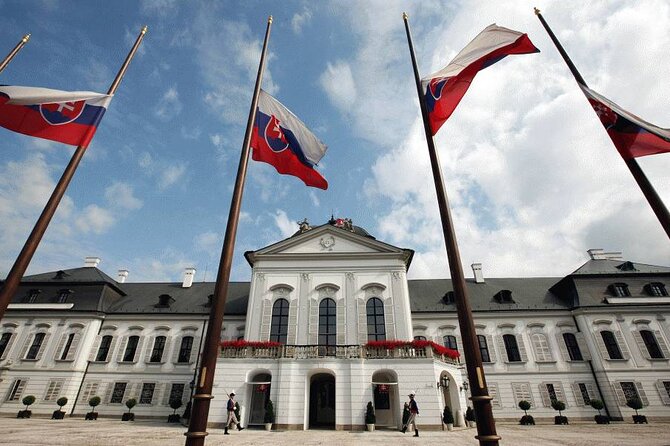
You then reach the Presidential Palace, sometimes called the White House of Slovakia. The guide talks about youth groups and general life during the communist parties period.
This stop is where you start hearing more personal and social effects of the system. Youth groups are especially important because they show how the state tried to shape not only laws, but attitudes. You get a sense of how people were pulled into organized life and how identity was formed through institutions, not just family and school.
A detail that makes a difference: Based on guide style described for this tour, expect family stories and examples, not only broad statements. People who lead this walk seem to use their own background to bring the era closer, such as accounts tied to parents and grandparents who lived through multiple regimes.
Back to Namestie SNP: fall of the wall, 1990s changes, and Bratislava’s new role
The tour returns to Namestie SNP to finish. The ending focuses on the end of the communist parties regime and the fall of the wall, then stretches into the 1990s when Czechoslovakia falls apart. The guide points out how Bratislava becomes the capital of the new state, Slovakia.
This wrap-up matters because it connects 20th-century upheaval to what you see today. You are not left with dates and slogans. You are left with an understanding of how quickly Europe can change, and how cities shift roles when borders redraw.
Even if you already know the basics of 1989, I find it useful when a local guide explains what changes in daily life and governance, then points you back to a familiar square where that history still lives in the urban layout.
What makes the guides on this tour so effective
The route works because the guide does the heavy lifting. Strong English and a high level of familiarity with 20th century Bratislava come up again and again in the descriptions of this experience, and it is easy to see why.
Two approaches stand out:
- Personal accounts tied to major events. Guides often bring family history into the story, including how relatives experienced different regimes. That turns history from a textbook into something you can picture.
- Interactive moments. The tour is designed so you can ask questions as you go. When a building or square sparks a question, the guide answers it on the spot, instead of waiting for a formal Q and A at the end.
Just note the downside mentioned in the experience feedback: with a lot of topics and limited time, you may feel overloaded if you take it all in at once. You can fix that by slowing your own pace between stops, grabbing a breath, and choosing which detail you care about most.
Price, group size, and pacing, the practical stuff that affects your experience
At $6.02 per person, this is one of those deals that only looks possible if you think about what you are paying for. You are buying organization, context, and interpretation, not museum tickets or long rides.
Group size is capped at 30 travelers, and that matters. A smaller group usually means fewer pauses and more chance the guide can keep everyone together, especially on a route with several quick stops. It also means it is easier to hear the guide in outdoor spaces where sound carries unpredictably.
The mobile ticket is another practical win. You do not need to print anything, and it helps you stay focused on the walk.
Who this tour suits best
This tour fits you if:
- You want a clear timeline of WWII to Communism in Bratislava without jumping between disconnected attractions
- You like guided walking tours where the guide points out what to notice
- You are comfortable with serious topics, especially the WWII and Holocaust framing at the synagogue stop
- You enjoy architecture and public spaces as clues to political history
You might prefer something else if you want slow, silent contemplation. With short stops and a tight schedule, this experience is more about guided context than leisurely self-paced wandering.
Should you book 20th Century Tour World War 2 and Communism?
If you are trying to understand Bratislava’s 20th century in one afternoon, I think this booking makes sense. The value is hard to ignore, the route is logical, and the guide approach sounds built for clarity, with family stories and room for questions.
Book it especially if you are short on time, because the tour compresses major themes into a walk you can finish while still having energy left to explore on your own afterward. Just go in knowing it moves quickly through heavy topics, and you will get more from it.
FAQ
How long is the tour?
The tour lasts about 2 hours 5 minutes.
What language is the tour offered in?
The tour is offered in English.
How much does the tour cost?
The price is $6.02 per person.
Is there a ticket or admission fee for the stops?
The listed stops note free admission tickets, so you do not pay entry fees at each site as part of the tour.
What is the maximum group size?
The tour has a maximum of 30 travelers.
What is the weather requirement and cancellation option?
The experience requires good weather. If it is canceled due to poor weather, you are offered another date or a full refund. Cancellation is free up to 24 hours in advance for a full refund.
New in the Bratislava listings
Tours, compared.

Guided Tour to Bratislava with Speed Boat Ride
Read our review →
Bratislava City & Castle Walking Tour with Sebastian in English
Read our review →