
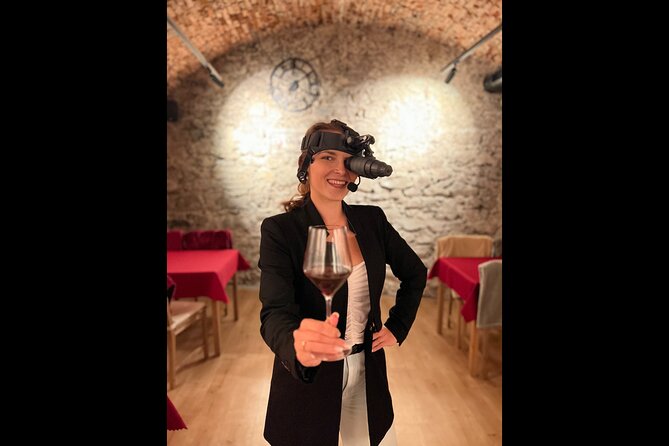
Reviewed · SMALL CARPATHIAN WINE TOURS
Wine Tasting IN THE DARK!
Wine tasting in the dark sounds odd, until you try it. Here you sit in a historic cellar, hear the guide in English, and watch the lights fade out while your sommelier pours. You then taste four Slovak wines without seeing a thing, using smell and flavor as your only clues.
What I like most is the four-wine format paired with an audio guide that keeps you moving and curious. I also love that the sommelier is actively involved, pouring each sample and reacting with you as you describe what you think you are tasting. For a session that lasts about 40 minutes, it is a lot of wine learning packed into a short time.
One drawback to consider is that this is a novelty experience, not a long, deep, traditional tasting. If you want lots of slow sipping and careful technique instruction, the timing can feel a bit rushed for the price.
In This Review
- Key highlights you should care about
- Entering a 17th-century cellar, then losing your sight
- What the 40-minute tasting actually feels like
- The blind pour: how you build a tasting “map” without visuals
- The four Slovak wines: a focused country sampler
- Why the darkness makes wine taste different
- Location and meeting point: make it easy to start on time
- Who this is best for, and who should rethink it
- Price and value: does $27.69 make sense?
- Should you book this wine tasting in the dark?
- FAQ
- Where is the meeting point for Wine Tasting IN THE DARK in Bratislava?
- How long does the tasting take?
- How many wines will I taste?
- Is the tasting guided in English?
- Do I get to see the wine before tasting?
- Who runs the tasting with me?
- Are children allowed?
- Are service animals allowed?
- What is the cancellation refund window?
- Is this activity near public transportation?
Key highlights you should care about
- Total darkness blind tasting: you cannot see your glass, only smell and taste.
- Four Slovak wines in one sitting: a fast, fun sampler of the country’s styles.
- Audio guide in English: humor plus structure, so you always know what to do next.
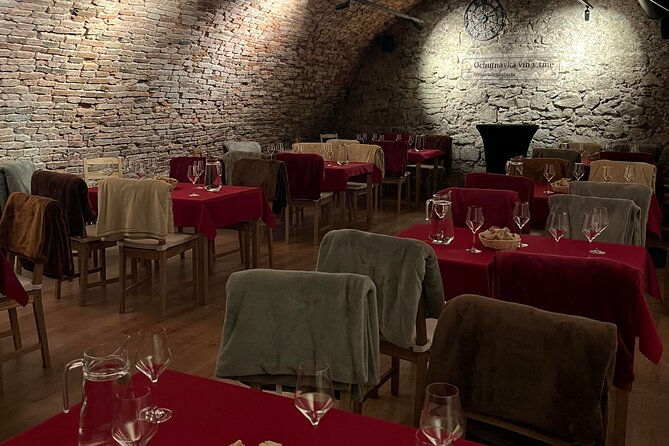
- 17th-century cellar atmosphere: you can see the space before lights go out, then it turns pitch black.
- Small-group feel (max 40): enough room for guidance, without turning into a classroom.
- Built-in surprise factor: guessing what the wine is becomes part of the entertainment.
Entering a 17th-century cellar, then losing your sight
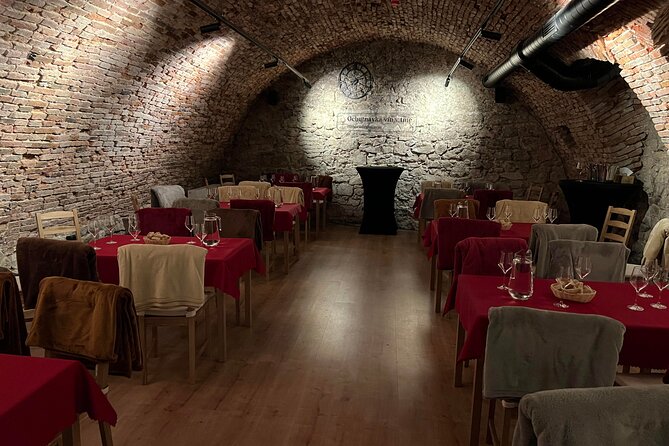
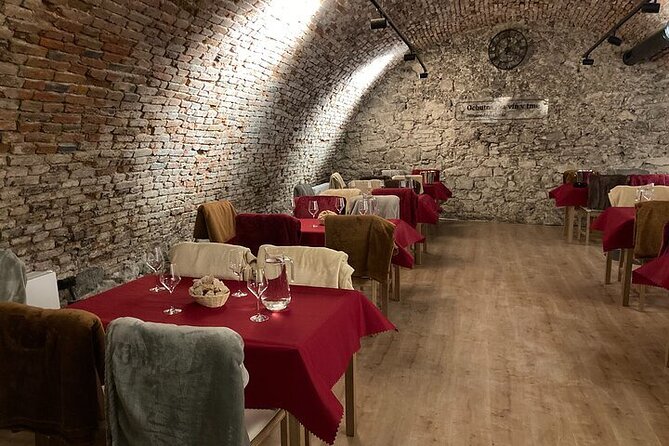
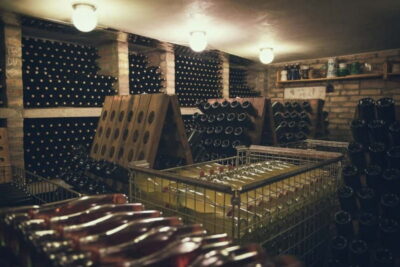
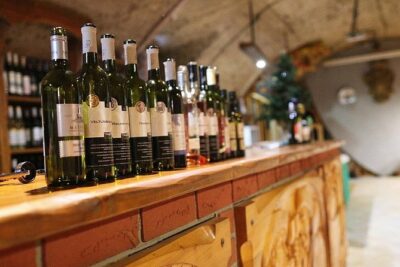
The experience starts right in Bratislava’s Old Town, at Michalská 3. You are welcomed into the wine cellar first, when you can still see the historical surroundings and get comfortable with the setting. This matters more than it sounds. You are not dropped into darkness right away. You get a moment to orient yourself, breathe in the cellar air, and settle in before the main event.
Then comes the key twist. After a short introduction from the audio guide, the lights slowly fade. The goal is not dim lighting. It is full loss of sight, with the entire tasting taking place when the room goes truly dark. It is a gentle setup that helps you avoid the jump-scare feeling some darkness activities can create.
The cellar itself is part of the value. You are not just doing a blind pour at a generic bar table. You are tasting in a space that fits the story of wine in Slovakia, and the contrast between the visible cellar at the start and the dark at the end gives the experience its shape.
More Small Carpathian wine runs:
- Bratislava: Wine Tasting with Sommelier
★ 4.4 · 274 reviews - Bratislava: Wine Tasting Experience in the Dark
★ 4.8 · 155 reviews - Quick Wine Tasting in Michalská
★ 5.0 · 39 reviews - Wine Tasting with Sommelier in Bratislava
★ 4.0 · 34 reviews - Bratislava 3-Hour Wine Tasting
★ 4.5 · 15 reviews
What the 40-minute tasting actually feels like
Plan for about 40 minutes from start to finish. It moves. The activity also asks you to arrive 5 minutes early, so you can check in and get seated without rushing.
Here is the rhythm you should expect:
- Welcome and seating: you sit down in the old wine cellar with time to take in the ambiance.
- Audio introduction: the guide sets the tone, explains how to taste without sight, and cues you through each sample.
- Sommelier pours, unseen by you: the wine arrives in your glass, but you do not know what it is. You likely will not see it at all, by design.
- Smell and sip prompts: you focus on aroma first, then flavor, then finish. You are encouraged to share your guesses or reactions.
- One wine after another, four total: the tasting is structured so you do not get stuck on any single sample.
A few things pop up in real-world feedback that help you set expectations. The humor in the audio is frequently mentioned. The best part is that it is not just background noise. It is timed to your tasting stages. And while you may hear a pre-recorded voice during the process, the sommelier still pours your next wine and listens as you react, keeping it from feeling completely robotic.
Also, this is an alcohol-focused experience, so it is not a kid-friendly activity. That makes the vibe calmer and more adult, even though it can still be playful.
The blind pour: how you build a tasting “map” without visuals
If you have ever judged wine by color, clarity, or bubbles, this will feel unfamiliar fast. In darkness, those cues vanish. So your tasting brain has to switch gears.
What you do instead is simple, and honestly satisfying:
- You put your nose to work right away.
- You look for aroma families you recognize.
- You sip, then pay attention to flavor, sweetness or dryness, and how it finishes.
You will be guessing during the tasting, and the audio plus sommelier prompts guide you into doing it in a structured way, not random guessing. One nice outcome from the format is that it often becomes easier to spot broad style differences even if you are not a wine expert. Several people found they could identify things like dry versus sweet, even when they could not name grape varieties.
That is the real skill you get from the darkroom concept. You stop relying on sight-based expectations. You build a new internal “map” based on aroma and taste.
And since you are trying four different Slovak wines, you get multiple chances to practice that skill. By the end, you are not just entertained. You are better at noticing what your own senses are telling you.
The four Slovak wines: a focused country sampler
The tour serves four unique Slovak wines. That is a sweet spot for value. You get variety without the fatigue that sometimes comes from longer tastings where you lose your attention.
Even if you do not collect bottles like a serious wine hobbyist, this format helps you understand what Slovak wine can feel like. The country is not just a blur of one style. You taste contrasting profiles across the flight, and that makes the learning real.
A couple practical notes to keep in mind:
- You are tasting in the dark, so it can be harder to tell what is happening in the glass between samples.
- You will probably drink slowly, since you are also smelling and guessing. That is good, but it does mean you will not get a huge amount of time with each wine.
If you are someone who expects a classic sommelier-style walkthrough of terroir and grape-by-grape detail, you may find it more playful than academic. But if you enjoy guided tasting, smell games, and figuring things out, this is a great match.
Why the darkness makes wine taste different
Wine tasting is built on senses. Sight is one of them. Darkness removes one sense, which forces the other senses to become louder.
In practice, this often changes your first impressions. You might taste something and think you understand it, then later learn what it actually was. That contrast can be a real learning moment. It trains you to stop assuming your senses are automatically correct just because you recognize the look of wine.
Darkness also changes the social feel of the tasting. Without visuals, you pay more attention to your own reactions and to the guide’s prompts. Some people describe it as funny and comical, and that makes sense. When you cannot see the wine, your guesses tend to get more creative. That keeps the session lively.
There is also a calmer, almost meditative angle to it. Even when you are laughing, you are still focused. The result is that the experience can be relaxing in a way a loud bar tasting rarely is.
If you have a phobia of darkness or anxiety triggered by low-light situations, this is not the right activity. The description explicitly notes it is not recommended for travelers suffering mental difficulties or phobias, which strongly suggests the dark part is intense, not just subtle ambiance.
More cellars a short drive out:
- Bratislava Wine Tasting in City Center★ 4.5 · 14 reviews
- Devin Castle Tour with Wine Tasting★ 4.5 · 13 reviews
- Bratislava Traditional Wine and Food Tour★ 4.5 · 12 reviews
- Know Your Wines in Bratislava★ 5.0 · 10 reviews
Location and meeting point: make it easy to start on time
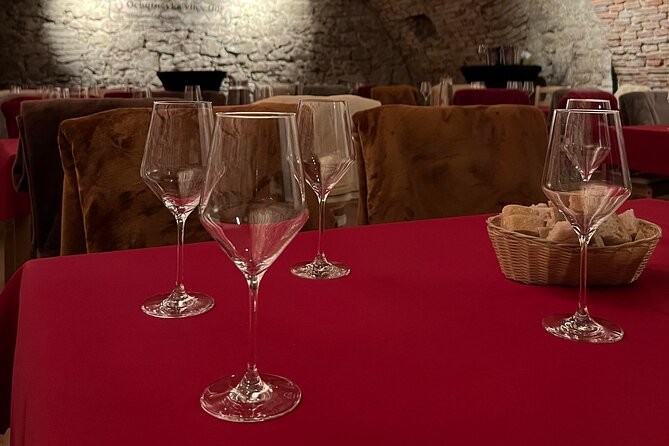
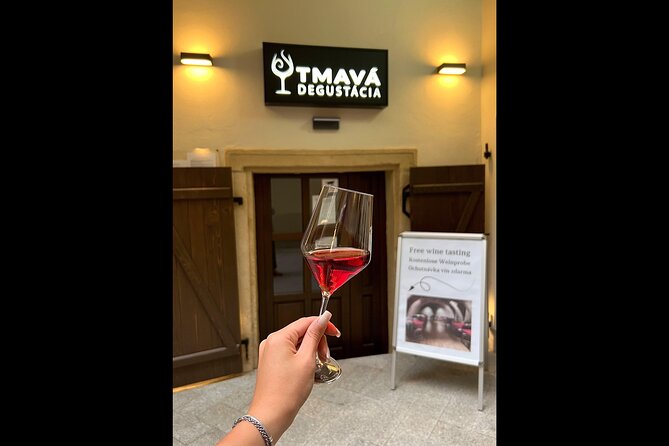
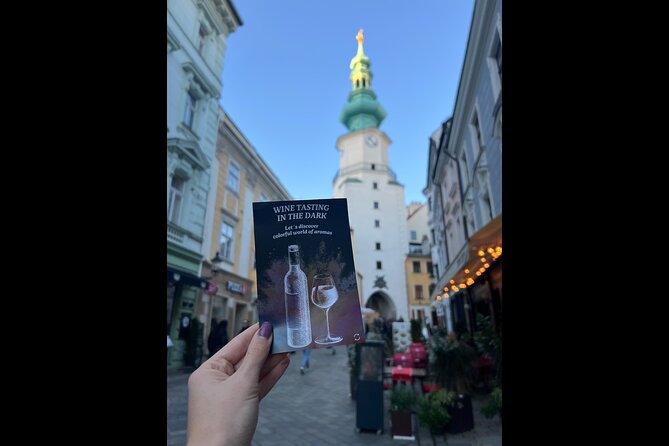
The tour meets at Michalská 3, 811 02 Bratislava-Staré Mesto, Slovakia. It ends back at the same point, which keeps your planning simple.
It also runs as a mobile ticket experience, and it is near public transportation, so you should not need a taxi to reach it. The practical takeaway is timing. Because the lights go out during the session, the operator asks you to arrive 5 minutes before start. If you show up late, you will miss the “light fading” build-up, and that is a major part of the atmosphere.
Group size is capped at 40 travelers, which helps keep the experience coordinated. In a group that size, the audio guide keeps everyone on track, while the sommelier can still react to the group.
Who this is best for, and who should rethink it
This experience works best for:
- People who like trying wine styles but want something more fun than a standard tasting.
- Travelers in Bratislava’s Old Town who want a short activity that fits into a busy sightseeing day.
- Anyone who enjoys sensory challenges, guessing games, and learning how smell shapes taste.
It might not be ideal if:
- You want a long, traditional wine tour with lots of visible wine comparisons and slower pacing.
- You need a very interactive, fully live guide experience. Even though the sommelier is involved, the audio guide is a big part of how the session runs.
- You have strong discomfort with darkness. This is central to the concept.
One more reality check about expectations: you are paying for the twist. Some people loved that novelty. Others felt that for the time spent, the price could be seen as high if you expected more wine quantity or more extended instruction. Your best decision comes from thinking about what you want: a quick, guided blind tasting experience, or a longer, classic education session.
Price and value: does $27.69 make sense?
At $27.69 per person for about 40 minutes, the price is really tied to three things:
- A guided blind tasting of four Slovak wines
- The darkroom format in a historic cellar
- Audio guide structure plus sommelier pouring and listening
If you compare this to basic “walk in, sip a flight” tastings, you are clearly paying extra for the darkness and the storytelling style. That is why people who want standard tastings sometimes call it expensive for the time.
But if you value the experience itself, not just the liquid, it can feel fair. You get a memorable setting, you learn a tasting approach you can reuse later, and you leave with at least some clarity on what Slovak wines taste like across a range.
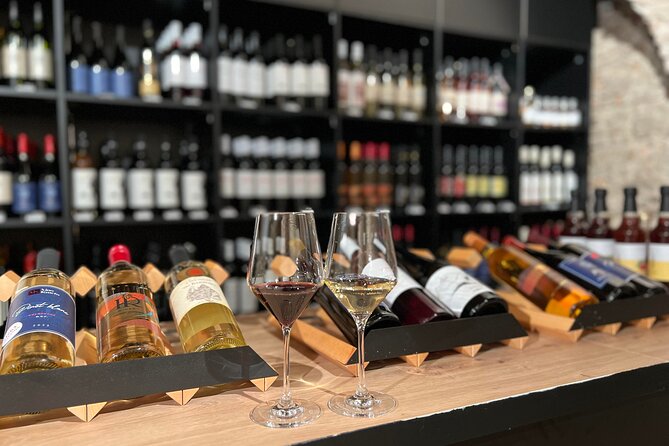
A practical bonus mentioned in feedback: you might want to follow your tasting with a purchase. Some visitors picked up small bottles to bring home, including mini sizes around 100ml in one case. If that matters to you, the dark tasting can turn into an easy souvenir plan.
Should you book this wine tasting in the dark?
I would book it if you want a hands-on, sensory-focused activity in Bratislava that breaks up sightseeing and gives you real learning through practice. The strongest reasons to go are the blind tasting, the four-wine Slovak selection, and the fact that the experience is guided in English with a fun audio format and an engaged sommelier.
I would skip it if your main goal is classic wine education over a longer session, or if darkness triggers anxiety or phobia. In that case, the concept is the product, and it is not a gentle version.
If you are deciding today, pick the option that matches your mood. This is for curiosity, humor, and scent-first wine tasting. If that sounds like your kind of night, this is a very good use of time in the Old Town.
FAQ
Where is the meeting point for Wine Tasting IN THE DARK in Bratislava?
The tour meets at Michalská 3, 811 02 Bratislava-Staré Mesto, Slovakia.
How long does the tasting take?
It lasts about 40 minutes.
How many wines will I taste?
You will taste four unique Slovak wines.
Is the tasting guided in English?
Yes, it is offered in English, with an audio guide during the tasting.
Do I get to see the wine before tasting?
No. You will not know or see which wine is poured into your glass, and the tasting happens when the lights go out.
Who runs the tasting with me?
An audio guide leads you through the tasting, and a sommelier pours the wines and guides you through each sample.
Are children allowed?
No. Children are not allowed due to the alcohol beverages.
Are service animals allowed?
Yes, service animals are allowed.
What is the cancellation refund window?
You can cancel for free up to 24 hours in advance for a full refund.
Is this activity near public transportation?
Yes. The activity is near public transportation.
More on the Menu around Bratislava
New in the Bratislava listings

Small Carpathian Wine Tours, compared.
Private Wine Tasting at a Family-Operated Winery
Read our review →
Browse the lists this tour appears in