Reviewed · BRATISLAVA
Wachau, Melk Abbey & Salzburg (Sound of Music & UNESCO)
Danube views and Salzburg Mozart energy, all in one day. I really like two things about this experience: the small group size (max 7) that keeps the pace calm, and the comfortable air-conditioned vehicle that makes a long day feel manageable. You also get a guided flow that mixes big sights with breathing room, so you can actually enjoy the places instead of sprinting between them.
The main thing to consider is the format: it runs roughly 11 to 16 hours and includes moderate walking, plus you have to plan for no lunch or dinner being included. If you prefer short days with minimal walking, this may feel like a lot.
In This Review
- Key Highlights You Will Care About
- Why This Wachau and Salzburg Route Feels Efficient
- Pickup Timing and the Real-Life Pace of an 11 to 16 Hour Day
- Dürnstein: Guided Walk First, Then Take Your Time
- Melk Abbey: Baroque Wow, Plus Time to Notice Details
- Traunkirchen on Lake Traunsee: Where Free Time Actually Helps
- Anger Church Near Salzburg: A Small Detour With Big Architecture Clues
- Salzburg Core Sights: Mozart, Mirabell, and Historic Streets
- The Sound of Music Connection You Can Actually See
- Price and Value: What $216.56 Really Covers
- Small Group Comfort: Why It Changes the Quality of the Day
- What to Pack and How to Plan Your Day
- Who Should Book This Tour
- Should You Book Wachau, Melk Abbey, and Salzburg?
- FAQ
- What time does the tour start, and is pickup included?
- How long does this experience take?
- Is the tour offered in English?
- What group size should I expect?
- What’s included in the price?
- Are admission tickets and meals included?
- What if the weather is bad or I need to cancel?
Key Highlights You Will Care About
- Max 7 travelers, so questions are easy and the pace stays human
- Wachau Valley vineyard country, with a guided Dürnstein walk and optional wine tasting
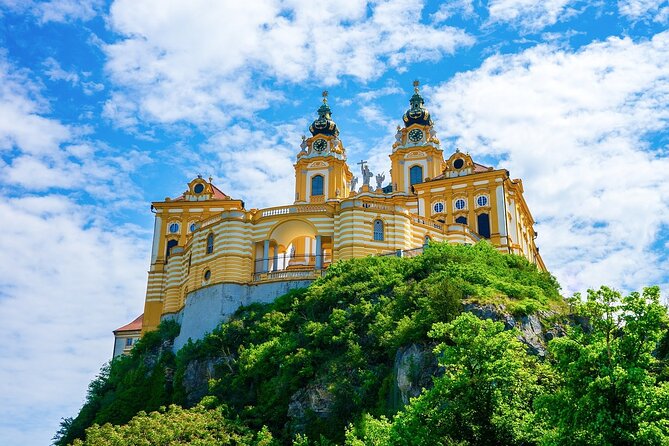
- Melk Abbey in Baroque splendor, including the church, Marble Hall, and library area stops
- Traunkirchen by Lake Traunsee, with time to stroll the promenade at your speed
- Salzburg essentials, including Mirabell Gardens and Mozart’s Birthplace
- Sound of Music filming locations, tied in during your time in Salzburg
Why This Wachau and Salzburg Route Feels Efficient
This day is built around geography and story. You start in Wachau Valley territory, where medieval towns and vineyards sit along the Danube. Then you shift into Salzburg, where Mozart, historic streets, and classic Sound of Music filming locations all meet in one compact city center.
What makes it work for you is the mix of guided time and unscheduled time. You get a guided walk in Dürnstein, structured sightseeing at Melk Abbey and Salzburg, and then free time where you can slow down. In a long tour, that balance matters.
Also, the small group size helps you feel the day instead of just “passing through.” You are not stuck behind a crowd. You get the chance to hear details, and when you want a photo or a question, the timing is flexible.
Others working the same corner of Bratislava:
- Bratislava: Sightseeing Bus Tour
★ 4.5 · 2,786 reviews - Bratislava Post-Communism Tour
★ 5.0 · 762 reviews - Bratislava: Cruise – Devín Castle Round Trip
★ 4.3 · 760 reviews - From Vienna: Bratislava and Budapest Guided Day Trip
★ 4.8 · 537 reviews - Bratislava: 1-Hour Small Group Walking Tour
★ 4.4 · 379 reviews
Pickup Timing and the Real-Life Pace of an 11 to 16 Hour Day
Start time is 7:00 am, with pickup windows from 7:00 to 8:00. You get the exact pickup timing the day before, which is useful when you are coordinating with a hotel check-in or parking plans.
Because this is a long day (listed as roughly 11 to 16 hours), you should think like a commuter. Bring layers for morning chill and later sun. You will likely spend more time on the road than you expect, especially as you swing between Austria and Germany near Salzburg.
The good news is comfort is built in. You have an air-conditioned vehicle, bottled water, parking fees, and a setup that keeps you moving. The pace is not described as rushed in the way some city-tours can be, and the max group size helps a lot with that.
One more practical point: it’s not a “stroll only” day. There is a moderate amount of walking. Comfortable shoes are a must.
Dürnstein: Guided Walk First, Then Take Your Time
Dürnstein sits in the Wachau Valley, and it has that classic postcard feel without requiring you to work for it. The day starts here with a guided walk (around 45 minutes), and then you get free time to explore the streets and local shops.
Here’s what I like about this stop for you: the guided walk gives you orientation fast. You get the “what am I looking at” context so later, when you wander on your own, you know what matters. Then the free time is where you decide how you want to experience the town, whether that means lingering for photos, grabbing a snack, or just enjoying the river valley mood.
Time tip: do not over-plan Dürnstein. Let part of it be unstructured. If you are the type who likes finding small streets and surprising viewpoints, this is one of your best chances today.
Melk Abbey: Baroque Wow, Plus Time to Notice Details
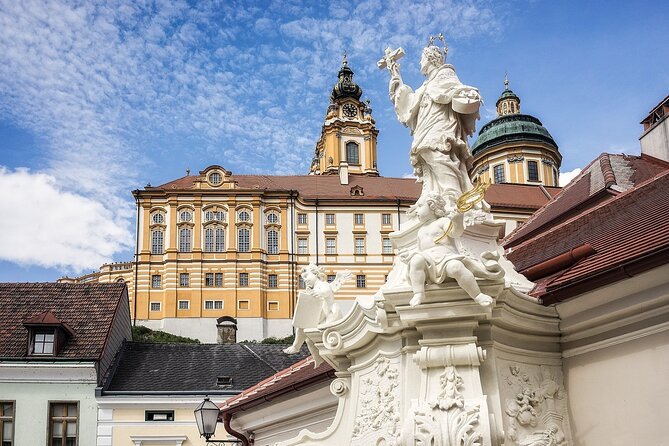
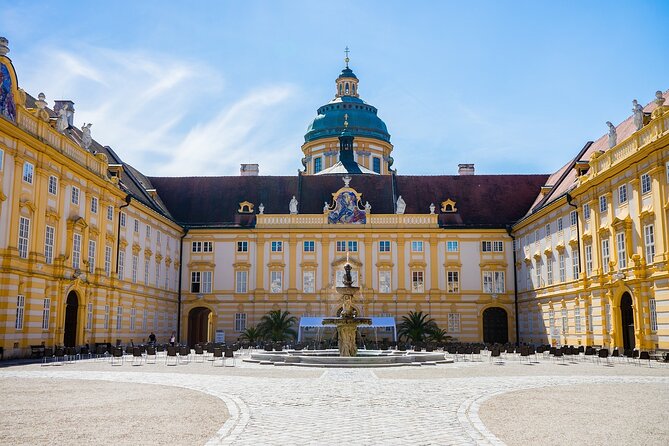
Melk Abbey is one of those places that can feel bigger than its walls. It’s perched above the Danube, and the architecture hits you right away. You also get a guided structure for the key highlights, with a visit time of about 40 minutes.
Before the abbey, wine lovers can sample regional wines in the Wachau Valley. Since it is optional, you can choose it based on your tastes and your schedule. Even if you skip the wine, the stop sets the mood for the region, because Wachau is not just scenery, it is a living wine landscape.
Inside the abbey visit, you are set up to see several signature areas, including:
- the Abbey Church
- the Marble Hall
- the Library
- the Panoramic Terrace
- the Gardens (seasonal)
That word “seasonal” is important. If gardens are part of your personal must-see list, check what time of year you are going. If they are not in full effect, you will still get the core architecture and views, but your expectations should match the season.
One drawback to plan around: 40 minutes goes quickly in an abbey this dense. The trick is to pick what you most care about. If you love the church and formal interiors, focus there. If panoramic views are your priority, make sure you spend enough time at the terrace.
Traunkirchen on Lake Traunsee: Where Free Time Actually Helps
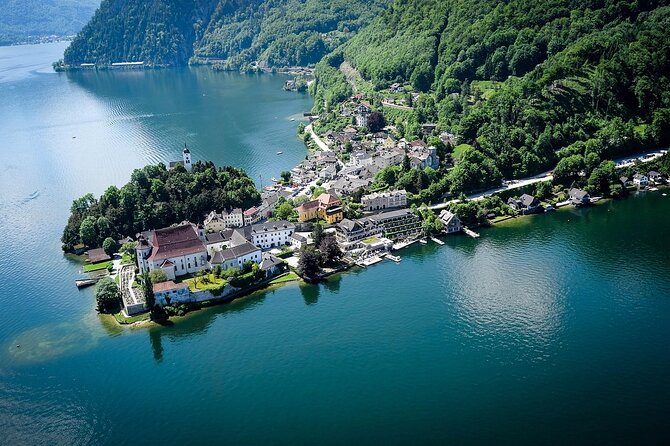
Next up is Traunkirchen, a calm lakeside village on a peninsula into Lake Traunsee. You get about 50 minutes, and that matters because Traunkirchen is the kind of place where speed ruins the point.
The main experience here is straightforward:
- stroll the lakeside promenade
- admire the historic Fisherman’s Pulpit in the local church (if you choose to look in)
- enjoy the quiet village atmosphere
One nice thing about this stop is the photo potential is real, but you do not have to chase it. You can walk slowly and still get great angles. You also have time that is not locked into a tight checklist, so you can find your personal pacing.
If you want water time, there is mention of a boat ride across Lake Traunsee. Since boat rides are not listed as included, plan on paying separately if you decide to do it. In other words, this stop gives you options, not obligations.
Practical tip: if weather is sunny, take advantage of it here. This is the stop where you will feel the day shift from “museum-style sightseeing” to “I can breathe for a bit.”
Still deciding? These come up next in Bratislava:
- Guided City and Castle Tour from Bratislava★ 5.0 · 303 reviews
- Bratislava City & Castle Walking Tour with Sebastian in English★ 5.0 · 289 reviews
- Bratislava: Wine Tasting with Sommelier★ 4.4 · 274 reviews
- From Vienna: Bratislava & Countryside Guided Half Day Tour★ 4.6 · 239 reviews
Anger Church Near Salzburg: A Small Detour With Big Architecture Clues
Anger is in Germany, just across the border near Salzburg. It’s an interesting shift from abbeys and lakes into a single, focused church visit, about 30 minutes.
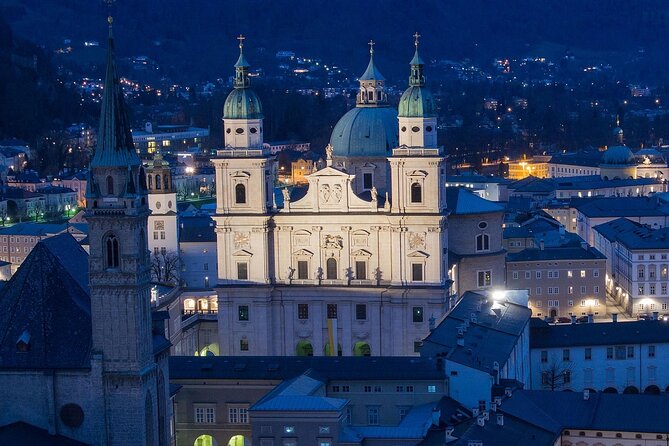
This church is built in 1447 from regular Nagelfluh stone blocks. It mixes hall and aisle design and features rib, net, and star vaults. There is also an onion-domed tower, and the tower is meant to give striking views of the surrounding area.
Why this stop is worth your time is simple: it teaches you how to read architecture faster. You see how vault styles create patterns, and you notice the way different parts of the building hold light and shadow.
The only real consideration is expectation. This is not a long “tour bus” stop with lots of adjacent sights. It is a focused church visit. If you love architecture, you will enjoy it. If you want continuous street-life, you might wish it were longer.
Salzburg Core Sights: Mozart, Mirabell, and Historic Streets
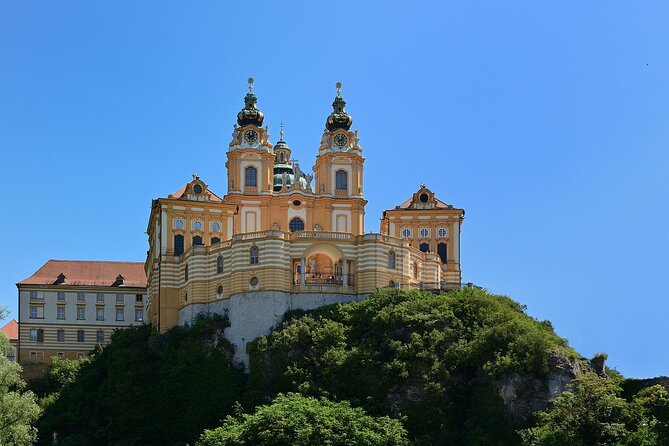
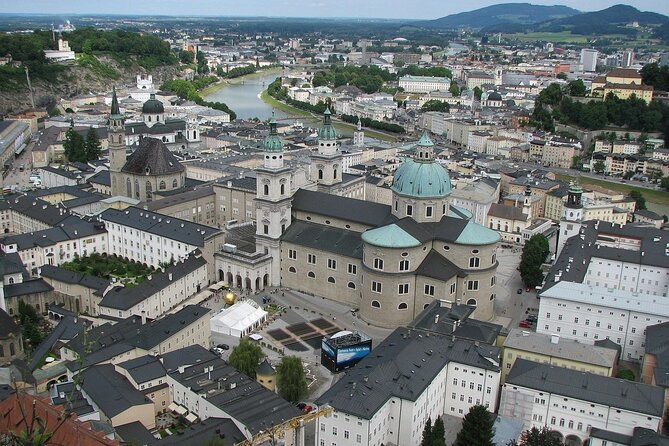
You arrive in Salzburg for about 2 hours 30 minutes, and you cover the core highlights that most people come for: Mozart, historic squares, and the city’s most recognizable walkable areas.
The key stops include:
- Mirabell Gardens
- Mozart’s Birthplace
- Getreidegasse
- Salzburg Cathedral
- Residenzplatz
- Mozartplatz
Here’s the practical value: this is enough time to get your bearings and still feel like you are in the middle of something important. Mirabell helps you orient toward the city’s classic “old Salzburg” feel. Getreidegasse is where you experience Salzburg as a real street, not just a point on a map.
If you are a Sound of Music fan, Salzburg is the anchor. Even without doing a performance, being in the city gives the references weight. You can point at the places, look at the streets, and connect names to locations.
Time tip for your own enjoyment: choose one or two of these to “go deep” on. If you try to do everything the same way, you may feel rushed by the end. Since the tour includes guided structure, you can relax a bit and let the flow do its job.
The Sound of Music Connection You Can Actually See
This trip is marketed around Sound of Music and UNESCO context, but it does not treat it like a gimmick. Since Salzburg is both Mozart’s birthplace and a filming location for classic scenes, your visit has built-in story momentum.
You are not just hearing that it exists. You are walking through places that match the cultural image people carry. That makes the references easier to remember, and it helps you connect the day’s earlier stops to the same theme of Central European tradition.
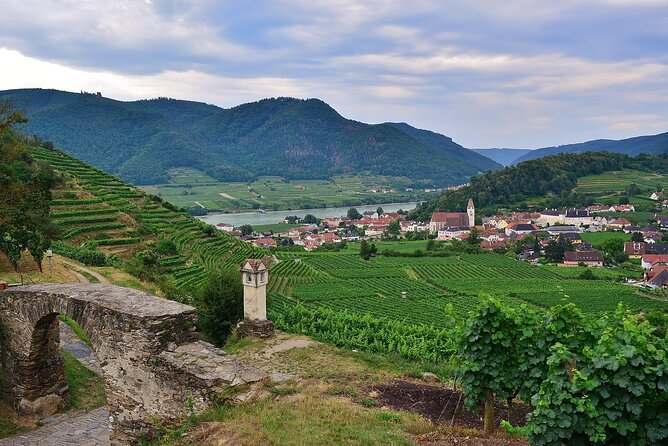
Also, UNESCO is not just a label here. Wachau Valley is described as a UNESCO World Heritage site, which you will feel in how towns sit, how the valley reads visually, and how the day’s stops keep pointing back to that long-standing human landscape.
Price and Value: What $216.56 Really Covers
At $216.56 per person, the value comes from the day being “packaged” correctly: transport, a full guided framework, and key scenic stops without you handling the logistics.
What is included:
- bottled water
- air-conditioned vehicle
- public transportation
- parking fees
- optional wine tasting in the Wachau Valley
- free time in Dürnstein, Traunkirchen, and Salzburg
What is not included:
- lunch and dinner
- admission fees to attractions
That admission fee detail matters. The tour can be great even if some entry costs are optional or separately ticketed, but you should budget for attractions you want to go inside. The good side is that several parts of the day include free time, so you can keep costs down by focusing on views, streets, and exterior experiences.
For me, the best value case is this: if you want a single-day hit of Wachau Valley, an abbey visit, lakeside time, and core Salzburg highlights, paying for a guide and comfortable transport usually saves you time and decision fatigue. If you are the kind of traveler who loves planning every stop yourself and skipping guided time, you might get a similar experience cheaper on public transport, but you would be trading away the structured flow.
Small Group Comfort: Why It Changes the Quality of the Day
One of the most praised aspects is the overall comfort and the way the group size affects the experience. With a max of 7 travelers, you do not feel like you are in an assembly line.
That matters when you are moving through multiple locations across borders and when you have limited time at each stop. With a small group, you are more likely to:
- ask questions without waiting
- get small timing adjustments
- enjoy the walk instead of feeling pushed
Comfort also includes the practical side: an air-conditioned vehicle and bottled water for a long day. Add in parking fees handled for you, and the “travel stress” part drops away. That lets you focus on what you came for: places.
What to Pack and How to Plan Your Day
Because there is moderate walking, pack for comfort. Wear shoes you trust. Bring a light layer. Even in decent weather, mornings and afternoons can feel different.
For your schedule, remember:
- lunch is not included
- dinner is not included
- admission fees may apply depending on what you choose to enter
If you want to do the optional wine tasting, pace yourself. Wine is part of Wachau’s flavor, and the optional taste slot is a good time to take it easy, not a time to sprint through every later stop.
If the day depends on good weather, you should have a flexible mindset. If conditions are poor, you might be offered a different date or a full refund, but either way, your best experience comes with reasonable skies.
Who Should Book This Tour
This is a strong choice if:
- you want Wachau Valley and Salzburg in one long but organized day
- you like guided context plus real free time
- you enjoy history, architecture, and classic city sights
- you prefer small-group pacing over a big bus feel
You might want to think twice if:
- you need minimal walking or have mobility limitations (the tour notes it is unsuitable for people with mobility impairments)
- you want meals included
- you get tired quickly during long travel days
- you are traveling with children under 4 (not suitable)
Also, because the tour runs in English and is near public transportation, it tends to work well for independent travelers who still want a guide for the heavy lifting.
Should You Book Wachau, Melk Abbey, and Salzburg?
I’d book this if you want maximum “big day” value without feeling rushed. The combination of scenic Wachau stops, a high-impact abbey visit, and a concentrated Salzburg highlights plan is exactly the kind of itinerary that pays off when it is run well, and the small group size is a big part of that.
Skip it if you want lots of meals included, or if you want a short day with minimal walking. Also, if you dislike waiting in transit for long stretches, the 11 to 16 hour format might feel like too much.
If your priority is comfort, structure, and a guided framework that still leaves you time to wander, this is a solid bet.
FAQ
What time does the tour start, and is pickup included?
The tour start time is 7:00 am. Pickup is offered from 7:00 to 8:00, and you receive specific pickup information the day before.
How long does this experience take?
The duration is listed as approximately 11 to 16 hours.
Is the tour offered in English?
Yes, the tour is offered in English.
What group size should I expect?
The tour has a maximum of 7 travelers.
What’s included in the price?
Included items are bottled water, an air-conditioned vehicle, public transportation, parking fees, optional wine tasting in the Wachau Valley, and free time in Dürnstein, Traunkirchen, and Salzburg.
Are admission tickets and meals included?
Admission fees for attractions are not included, and lunch and dinner are also not included.
What if the weather is bad or I need to cancel?
The experience requires good weather. If it is canceled due to poor weather, you will be offered a different date or a full refund. You can also cancel for free up to 24 hours in advance for a full refund.