
Reviewed · WALKING TOURS
Bratislava Private Walking Tour with a Professional Guide
One-hour into your first stroll, Bratislava starts telling stories. This private walking tour strings together the city’s big turning points, from Roman rule and early Slavic arrivals to Ottoman pressure, Habsburg power, and the creation of the Slovak Republic. You’ll also get help seeing how the Danube and Morava shaped trade and politics, and why the city is known by different names in different languages.
What I like most is the chance to learn in a tight format without getting lost in a guidebook haze. You’ll also get clear historic context tied to what you can actually see, plus practical advice for what to do next. One consideration: entrance fees are not included, so if you want to go inside any ticketed sights, budget extra.
In This Review
- Key highlights to expect in 2 hours
- Starting at Hviezdoslavovo námestie, then getting your bearings fast
- Bratislava’s names, the Danube, and the Morava’s pull on power
- Roman Empire to the Slavs: seeing the early layers in your walk
- Hungarian annexation and the crowned royal connection at the Coronation Church
- St. Michael’s Gate and the medieval walls you can actually picture
- 15th century to Ottoman wars: the city as a contested royal town
- The 16th to 18th centuries: Habsburg power, 17th turmoil, and a Slovak national rise
- Peace of Pressburg, then Napoleonic-era tension across borders
- World War I, Czechoslovakia, World War II, and the 1993 Slovak Republic moment
- The guide’s style: history that comes with real next-step tips
- Price and value for a 2-hour private Old Town walk
- Who this tour suits best, and who might want a different format
- Should you book this Bratislava private walking tour?
- FAQ
- How long is the Bratislava private walking tour?
- How much does the tour cost?
- Is the tour private?
- Where does the tour start?
- Where does the tour end?
- Are entrance fees included?
- Do I get a ticket on my phone?
- Is it easy to get to the meeting point by transit?
- Are service animals allowed?
- Can I cancel for a full refund?
Key highlights to expect in 2 hours
- A guided timeline of Bratislava’s shifts in power, from Roman times through 1993
- Danube and Morava river stories that explain why Bratislava mattered
- Coronation Church focus, including its role in Hungarian royal crowning traditions
- St. Michael’s Gate and medieval walls, good for up-close photos and orientation
- Human-size sculptures around the Old Town, scattered for a fun walk-and-look vibe
- A guide who also shares practical tips, including shopping and local products, based on real guest feedback
Starting at Hviezdoslavovo námestie, then getting your bearings fast
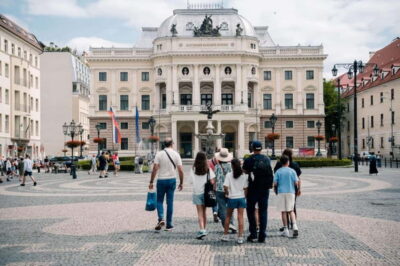
The tour begins at Hviezdoslavovo námestie in Bratislava-Old Town. That matters because it drops you into the part of the city where a short walk can still feel like you’ve covered a lot of ground. Expect the route to stay in the Old Town area, with the tour ending back at the meeting point.
In this 2-hour window, you’re not trying to “check boxes.” The goal is to connect streets and landmarks with the eras that shaped them. A private guide helps a lot here. If you have questions about names, dates, or why certain buildings look the way they do, you can ask immediately instead of waiting for a group pause.
One smart thing to do before you go: pick a couple of eras you’re most curious about. If you love Central Europe’s big empire swings, you’ll get plenty to chew on. If you’re more into 20th-century history, the guide’s timeline covers that too.
More of Bratislava on foot in an afternoon:
- Bratislava: 1-Hour Small Group Walking Tour
★ 4.4 · 379 reviews - Bratislava City & Castle Walking Tour with Sebastian in English
★ 5.0 · 289 reviews - Bratislava: Private Walking Tour with Optional Beer Tasting
★ 4.7 · 214 reviews - Bratislava walk tour with bonuses and castle 3€ + Tip, kids free
★ 5.0 · 191 reviews - Bratislava: 2- Hour Private Walking Tour
★ 4.5 · 118 reviews
Bratislava’s names, the Danube, and the Morava’s pull on power
Bratislava’s story is partly a language story. You’ll learn how the city has been called in different languages, and how names like Pressburg show up in the wider history of the region. That helps you read old maps and understand why documents from different countries seem to talk about the same place using different words.
Then you zoom out to the rivers. You’ll hear why the Danube is so important, and how the Morava adds another layer of geographic influence. This is one of those tours where you don’t just memorize facts. You learn a simple logic: rivers were routes for armies, goods, and ideas, so whoever controlled them had leverage.
Once you understand that, the Old Town starts making more sense. Instead of seeing random architecture, you start noticing patterns of defense, trade access, and the kinds of power that could reach this city. It’s an easy way to turn a short walking tour into something that sticks.
Roman Empire to the Slavs: seeing the early layers in your walk
The tour timeline starts early, with the Roman Empire and then the 5th-century arrival of the Slavs. Even if you cannot see Roman stones with your naked eye around every corner, this part of the walk gives you context for why later buildings and city planning happened where they did.
In practical terms, this helps you avoid a common mistake: assuming the city’s identity began in the medieval period. Bratislava only got baptized as Bratislava in 1919, but the region’s importance clearly predates that. Learning this early timeline makes the later political shifts feel less random and more like a long chain of occupation and negotiation.
If you like history that explains geography, this segment is especially valuable. The guide connects these early arrivals to how the region became a crossroads. You’re not just learning dates. You’re learning why those dates mattered.
Hungarian annexation and the crowned royal connection at the Coronation Church
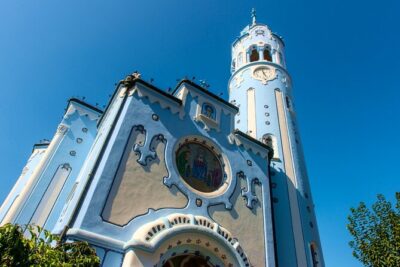
One of the tour’s strongest anchors is the Coronation Church, tied to Hungarian royal crowning traditions. The guide walks you toward understanding why this site mattered to power and legitimacy. Crowning is theater as much as ceremony, and the location of ceremonies helps a capital project authority.
This is where the tour feels most “place-based.” Instead of history being a lecture, it becomes a way to read a building. When you hear about Hungary’s role in the region, the Coronation Church is the physical clue that keeps the story from floating away.
A nice bonus in a short tour is that you also come away with photo direction. Once the guide points out what to look for, you’ll know what angles to try around the church area. And if you want to match your photos to the narrative, you can.
If you’re curious about Central Europe’s royal culture, this stop is a must. If you prefer modern history, you might still appreciate it because it sets up why 20th-century events hit the city so hard. Symbols of rule tend to leave long shadows.
St. Michael’s Gate and the medieval walls you can actually picture
Next, the tour turns to medieval defenses, focusing on St. Michael’s Gate and the surrounding medieval walls. A gate is more than a postcard subject. It’s a reminder that cities planned movement and controlled access.
What I like about this part of the tour is that it helps you orient yourself in Old Town. When you see the gate and understand the idea of walls, you naturally start placing streets in a mental map. It’s a simple way to reduce the “where am I?” feeling, especially if you’re walking for the first time.
This is also one of those segments that gives you useful historical texture. You’ll learn about major periods that shaped the city, including Ottoman wars and later political turbulence. Knowing that helps you understand why defensive architecture mattered, even if the city eventually changed role.
Don’t rush your photos here. You’ll want a couple of minutes to look up, not just straight ahead. Gate and wall details often reward slow glances.
More Bratislava trips to line up against this one
- Bratislava: 2-Hour Private Walking Tour★ 4.6 · 64 reviews
- Private Bratislava Grand City Tour★ 4.5 · 51 reviews
- Highlights of Bratislava – Old Town with Castle private tour★ 5.0 · 34 reviews
- Private Day Trip to Banska Stiavnica Unesco Site★ 5.0 · 30 reviews
15th century to Ottoman wars: the city as a contested royal town
The tour moves through a major arc: annexation by Hungary in the 10th century, then the development of Bratislava as a free royal town in the 15th century, followed by the pressure of Ottoman wars. You’ll hear how each shift changed the city’s purpose and the stakes of controlling it.
Why this matters to you as a visitor is simple. When the guide explains the city’s role as a royal town and then describes Ottoman pressure, you start seeing the city as strategic. It’s not just a scenic center. It’s a place that repeatedly ended up in other powers’ plans.
This also sets up the next big story: the 16th century, when Bratislava became the capital of Hungary and welcomed the Habsburg royal house. Even if your eyes are scanning for art and architecture, the guide gives you the political reason behind the scenes.
If you like history that connects to visible evidence, this stretch is one of the best parts. You’re walking through a city that has been reinterpreted over and over by whoever held authority.
The 16th to 18th centuries: Habsburg power, 17th turmoil, and a Slovak national rise
In the 16th century, the guide explains how Bratislava became the capital of Hungary, with the arrival of the Habsburg royal house. Then the story continues through 17th-century social and economic turmoil, and into the 18th century boom that helped the Slovak national movement gather force.
This is a strong “bridge” section. If you’re tempted to focus only on medieval stuff or only on 20th-century history, this connects the dots. It shows how the city could swing between growth and strain, and how that affects culture, language, and identity.
For you, the payoff is that you understand why cultural life shows up so strongly in Bratislava today. The guide’s timeline makes it easier to notice music and art as part of the city’s identity, not just background decoration.
By the time you reach the later political agreements, you’ll be ready for how these eras shaped more than rulers. They shaped social life, institutions, and what people believed about themselves.
Peace of Pressburg, then Napoleonic-era tension across borders
A standout topic in the tour is the Peace of Pressburg treaty between Austria and France, placed in the context of the Napoleonic wars. The guide uses this as a turning point that shows diplomacy as another form of control.
You might not think of treaties when you see a gate or a church, but that’s exactly why this stop works. It’s a reminder that history isn’t only battles. It’s also paperwork that redraws expectations and boundaries.
This segment is also useful because it helps you understand Bratislava’s position between bigger powers. The city has long been on the route between Austria and Hungary, and the guide’s timeline keeps reinforcing that geographic reality.
If you like political history, you’ll probably enjoy how the guide keeps shifting the focus between place and events. It keeps the walk feeling purposeful, not just scenic.
World War I, Czechoslovakia, World War II, and the 1993 Slovak Republic moment
By the time the tour reaches World War I, you’ll hear about the formation of Czechoslovakia. Then World War II enters with the details of Nazi annexation, collaboration with Nazi Germany, and allied bombing. The guide also covers the founding of the Slovak Republic in 1993.
This section is heavier. The guide doesn’t shy away from the realities of the 20th century. That’s important, because Bratislava’s modern identity is shaped by what happened here and in the region.
For your experience, the practical value is perspective. When you understand this arc, you can look at the Old Town and see more than beauty. You see how a city’s identity survived repeated political rebranding.
The tour then closes with music of Slovakia. That’s a clever ending because it shifts you from the politics of the last century to the cultural expression of identity. Even if you do not know much about Slovak music beforehand, the guide gives you a starting point for what to listen for later.
The guide’s style: history that comes with real next-step tips
One booking feedback point really stands out: the guide, Blanca, delivered interesting historic information and offered good tips for what to do in Bratislava. That included practical suggestions on where to shop and buy local products.
That part matters because it turns a walking tour into a planning tool. A site-focused tour is fun, but only half of the job. The other half is helping you spend your remaining hours well, and get value from local choices.
Because this is a private tour, you also have room to customize. You can ask on the spot for tweaks that fit your interests, as long as those fit the general walking plan. Entrance fees are not included, so if your added ideas require ticketed entry, you will handle that separately.
In short, the history is the engine. The practical advice is the steering wheel.
Price and value for a 2-hour private Old Town walk
The price is $254.60 per group, up to 15 people. For a private 2-hour experience in a major European capital, that can be excellent value, especially if you’re traveling with family or friends who want the same guide.
Here’s how to think about it. If your group fills the cap, the effective cost per person is low. If you’re a small group, the price spreads over fewer people. Either way, you’re paying for the guide time and the flexibility of a private route, not just for access to a site.
Also note that this tour is commonly booked about 54 days in advance on average. If you travel in a busy season or want a specific day, earlier booking is a safe move.
The tour uses a mobile ticket, which is convenient. It also runs near public transportation, so you can combine it with other plans without major logistics gymnastics.
Who this tour suits best, and who might want a different format
This tour is a good fit for you if you want a guided Old Town walk with a clear timeline. It’s especially useful if you like history tied to visible places like St. Michael’s Gate, the medieval walls, and the Coronation Church.
It’s also a strong choice if you value practical guidance after the tour. The guide’s tips about shopping and local products, highlighted by Blanca’s feedback, are exactly the kind of added value that helps you enjoy more of the city on your own.
If you prefer to spend most of your time inside museums or you want lots of ticketed entrances, this may feel a bit limited because entrance fees are not included and the format is a walking tour. Still, you can likely build your day around this by choosing what you want to add next.
Should you book this Bratislava private walking tour?
Yes, if you want a compact, private way to understand Bratislava. The tour’s value comes from connecting major eras, like Ottoman wars, Habsburg power, and the Slovak Republic founding, to the Old Town sites you can see on your walk.
Book it if you want both history and practical next steps, including help with where to shop and what local products to look for. That combination is rare in short tours, and it’s the part that tends to make people feel like they got more than a standard walk.
Consider your decision based on your group size. With up to 15 people, the per-person value can be very good if you can share the cost. If you’re traveling solo or as a couple, it can still be worthwhile, but only if you strongly prefer private guiding over a group tour.
FAQ
How long is the Bratislava private walking tour?
The tour lasts about 2 hours.
How much does the tour cost?
It costs $254.60 per group, for up to 15 people.
Is the tour private?
Yes. This is a private tour, so only your group participates.
Where does the tour start?
The meeting point is Hviezdoslavovo námestie 811 02 Bratislava-Old Town, Slovakia.
Where does the tour end?
The tour ends back at the meeting point.
Are entrance fees included?
No. Entrance fees are not included.
Do I get a ticket on my phone?
Yes. The tour uses a mobile ticket.
Is it easy to get to the meeting point by transit?
Yes. The meeting point is near public transportation.
Are service animals allowed?
Service animals are allowed.
Can I cancel for a full refund?
Yes. You can cancel up to 24 hours in advance for a full refund.
New in the Bratislava listings
Walking Tours, compared.
Bratislava City & Castle Walking Tour with Sebastian in English
Read our review →
Private Walking Tour with Optional Beer Tasting
Read our review →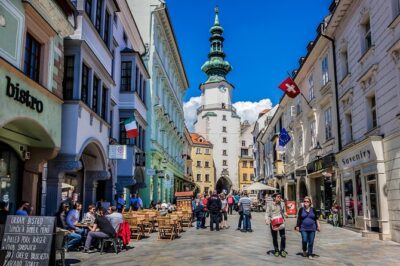
Bratislava walk tour with bonuses and castle 3€ + Tip, kids free
Read our review →

Bratislava Card with Public Transport Option & Walking Tour
Read our review →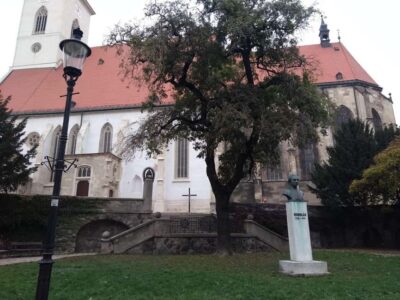
Browse the lists this tour appears in